Before you startGeneral guidance from our members' experience, checked against the sources listed at the foot of this page. Old bicycles vary, so check everything against your own bike. Brakes, steering, wheels and tyres are safety-critical: if you're not sure, have a qualified mechanic do or check the work. Any work you do is at your own risk. See our terms.
The steel a frame is made from shapes its weight, its ride and what it's worth. These are the tubings you'll meet most on British bikes.
| Tubing | What it is | Examples in this guide |
|---|---|---|
| Reynolds 531 | Manganese-molybdenum steel tubes (Reynolds' 1988 brochure). Made in several sets: in 1988 these were 531 Competition, Super Tourist, All-Terrain and Tandem. | Raleigh Professional; the Raleigh Super Course had 531 main tubes |
| Reynolds 753 | Specially processed manganese-molybdenum tubes, available only to builders approved by Reynolds (1988 brochure). | Raleigh Team Professional framesets |
| Reynolds 501 | Chrome-molybdenum steel, introduced as a tube set for volume producers (1988 brochure). | Raleigh Corsa and Sirocco in the 1984 catalogue |
| High-tensile steel | Plain carbon steel tubes. Raleigh's catalogues name its own grades, such as 20-30 and 18-23. | Raleigh Pulsar (18-23 high-tensile, 1984); Super Course forks and chainstays (20-30) |
How to tell
- Look for the Reynolds transferReynolds frames carry a Reynolds transfer naming the tubing. Transfers can be moved between frames, so treat it as a clue, not proof.
- Check the catalogueThe maker's catalogue for the model and year states the tubing. Many model pages in this guide list it under Known components.
- Weigh the frameButted Reynolds tubing is lighter than plain high-tensile steel of the same size, but weight varies with size and fittings, so compare like with like.
- Check the forkSome frames had Reynolds main tubes but plainer forks or stays. The catalogue will say.
Reynolds transfers
Reynolds 501 transfers on three Raleighs. The one on the Pro Race says double butted frame tubes.
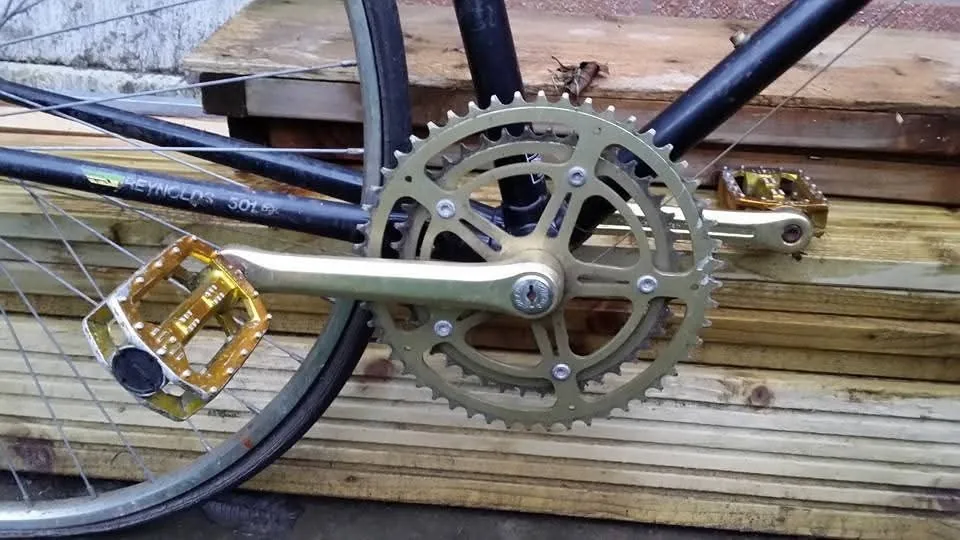
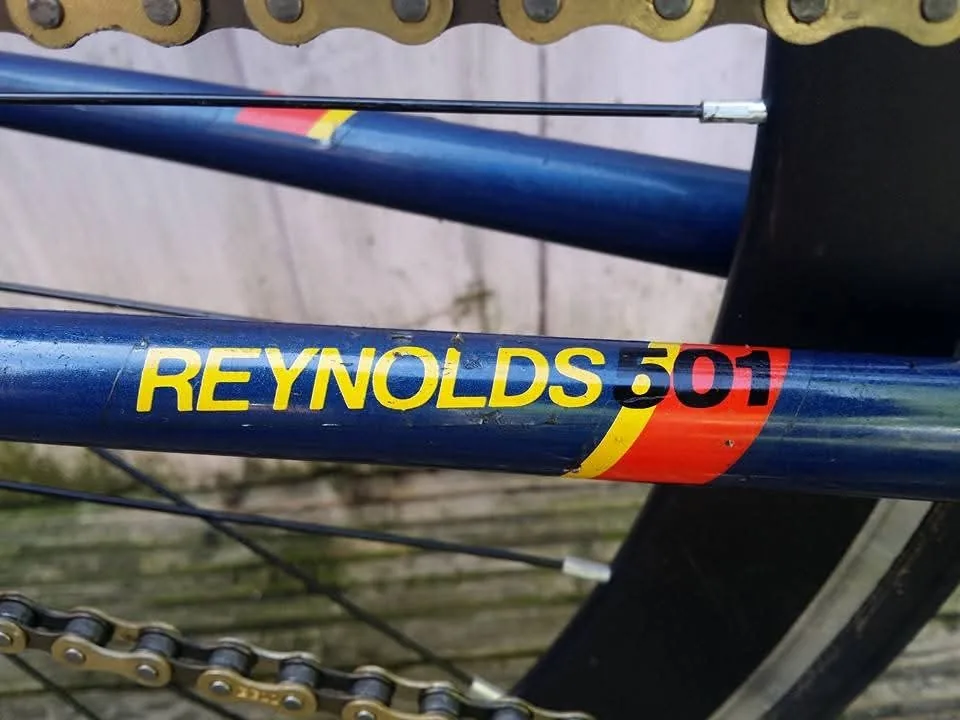
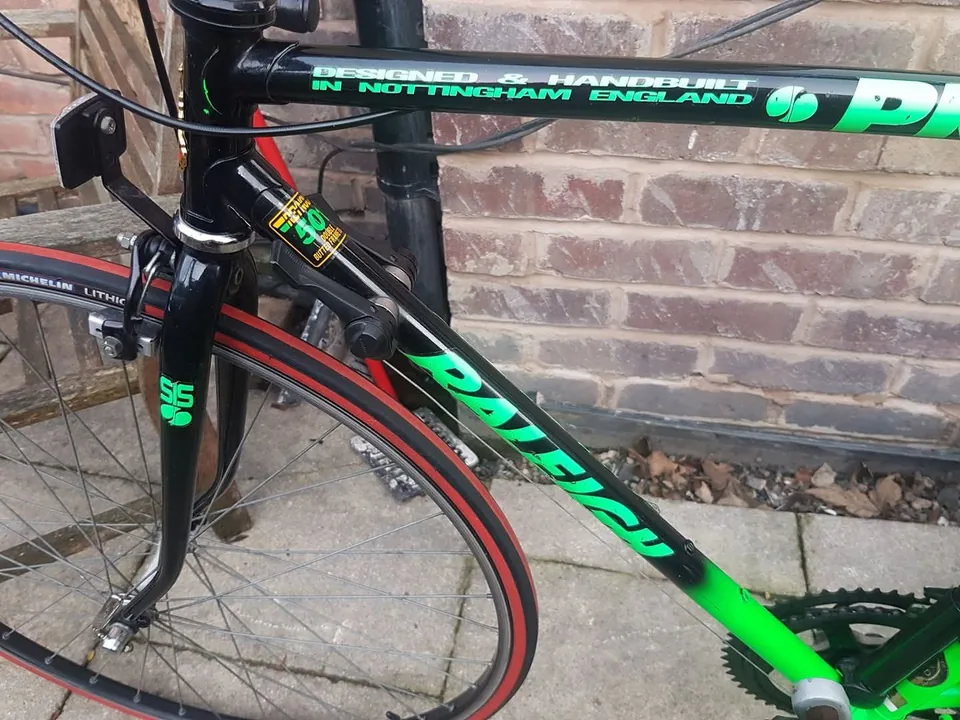
Photos: Garry Gregory.
Value
As a broad rule, original Reynolds 531 and 753 frames from respected makers attract the most collector interest; 501 frames make excellent riders; high-tensile frames are worth restoring as practical bikes rather than investments.
Sources
Checked 19 October 2026. Method tips without a source are our members' experience.